Greig Oldford

Ecosystem science for ocean decisions · Pacific Canada

Greig
Oldford

I use ecosystem science to inform sustainable management of fisheries and oceans.

My models trace change from physics to fisheries using techniques from ecosystem ecology, computer science, ocean and atmospheric sciences, and fisheries science.

  • Ecosystem Scientist · Fisheries and Oceans Canada, Pacific Region
  • PhD Candidate · Institute for the Oceans and Fisheries, UBC
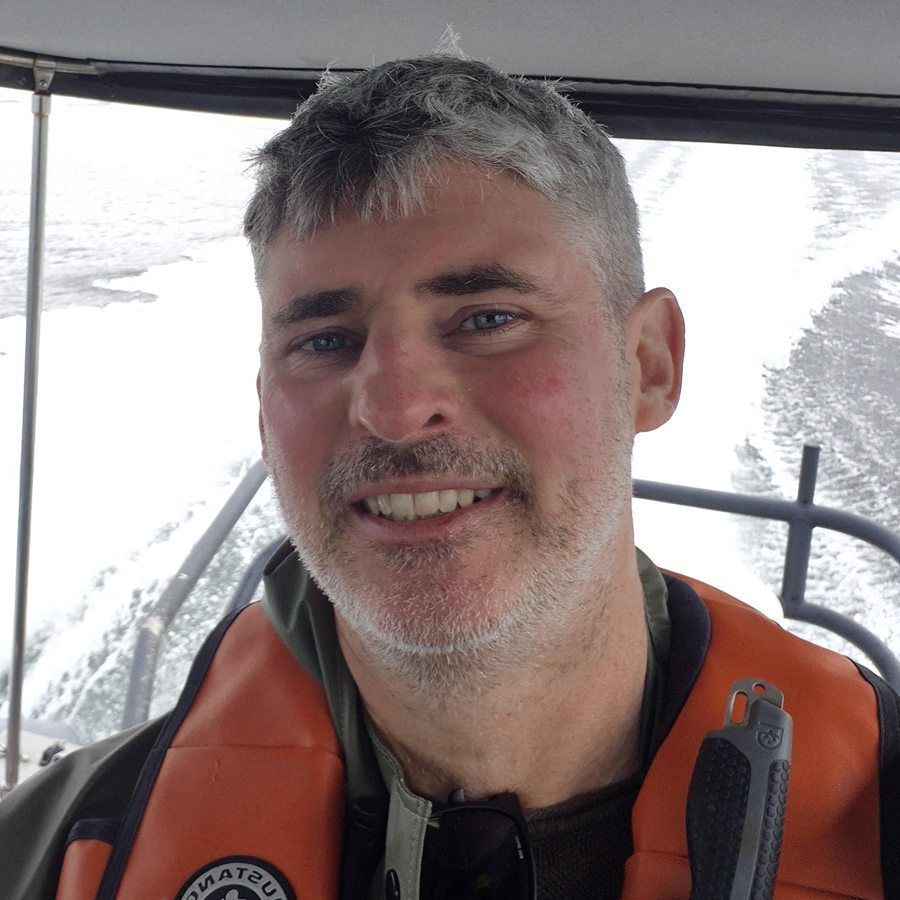
Greig Oldford smiling, in a life jacket aboard a boat on the water
Vancouver, British Columbia

About

Between science and management

I'm an ecosystem scientist with Fisheries and Oceans Canada and a PhD candidate in UBC's Global Ocean Modelling Lab with Prof. Villy Christensen. Since 2025 I have been managing a group of research scientists and field and laboratory biologists at the Pacific Science Enterprise Centre in West Vancouver, BC.

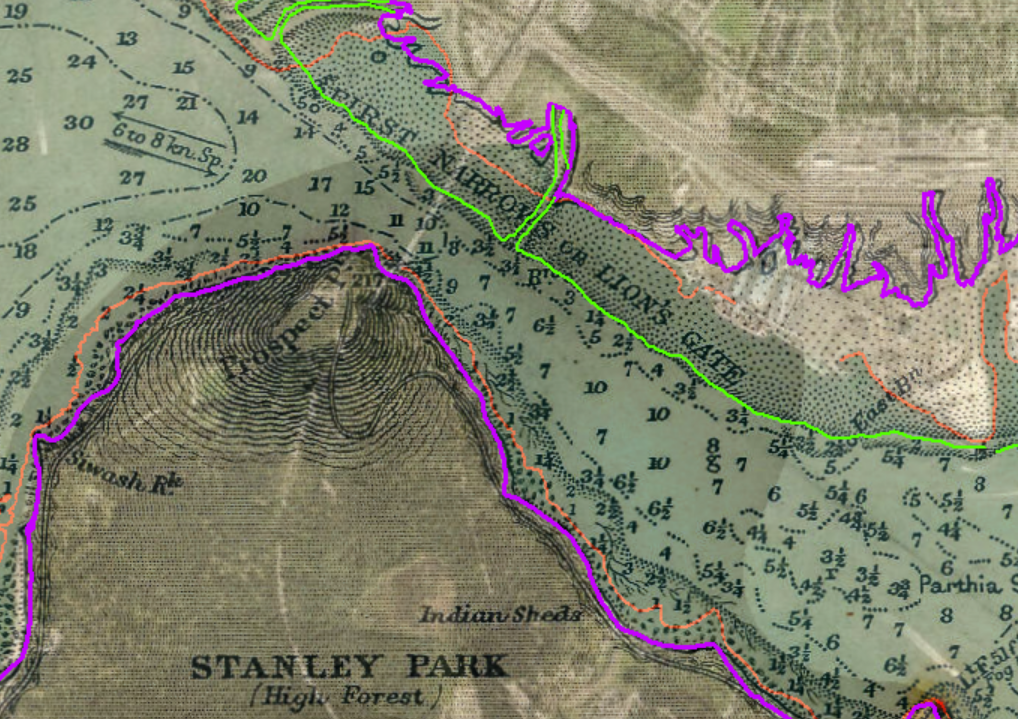
Much of my work has been in partnership with First Nations. With Tsleil-Waututh Nation, I helped reconstruct the pre-contact shoreline of Burrard Inlet through participatory mapping and a two-eyed seeing approach. As part of the federal team on the Great Bear Sea MPA network, planned with 17 First Nations and the Province of BC, I co-led technical analyses on behalf of DFO. I have also briefed senior management, contributed to Canadian Science Advisory Secretariat peer reviews, and testified to Parliament's Fisheries Committee on how DFO uses science.

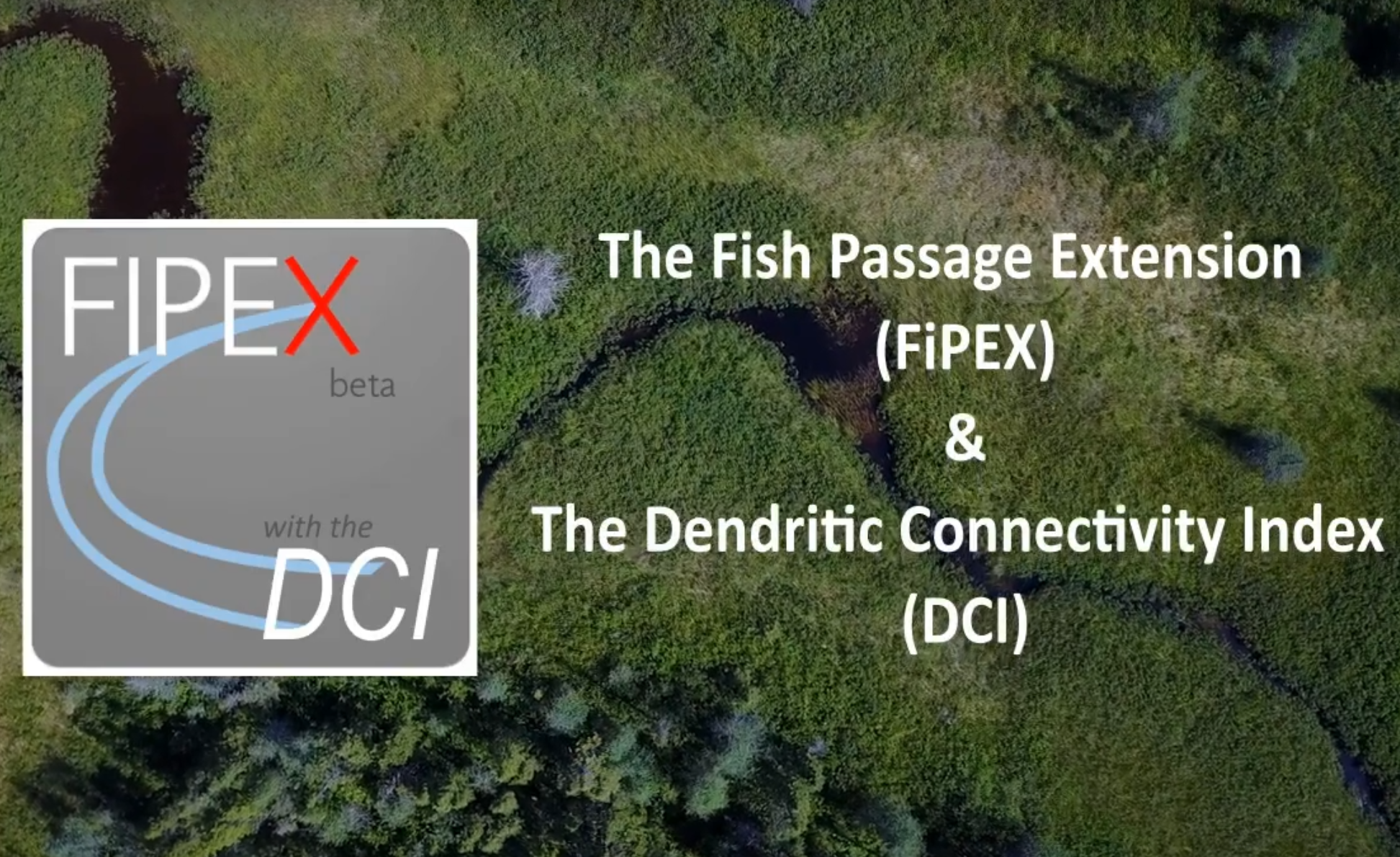
Today I build end-to-end ecosystem models of the Strait of Georgia, starting from HOTSSea, a four-decade ocean hindcast, to weigh competing explanations for salmon declines, such as food supply versus seal predation, before management acts on either. I also develop FIPEX, which agencies use to decide which river barriers to fix first.

13+
years in DFO science, oceans management and planning
1980–2018
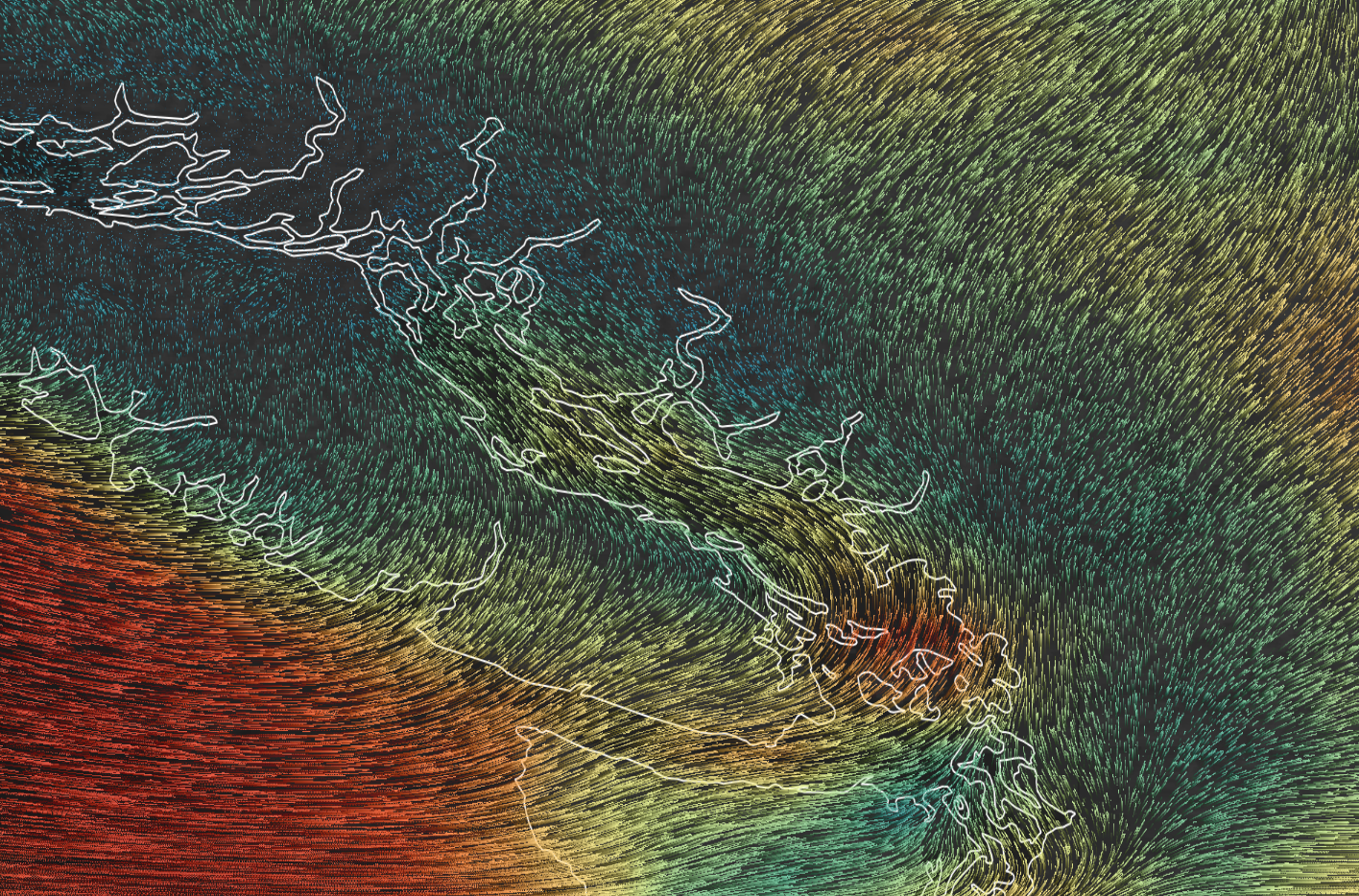
Salish Sea ocean physics reconstructed at 1.5 km
17
First Nations partners in the Great Bear Sea MPA network
2022
invited expert witness, House of Commons Fisheries Committee
From science to decisions

Where the work is used

Research matters most when it changes what people decide. Here is where my work has fed into management, policy and planning.

Marine conservation

Designing a protected area network

As part of the federal team, co-led gap and representation analyses that measured how existing and proposed protection met conservation objectives for the Great Bear Sea MPA network, endorsed in 2023.

→ Network action plan · DFO Prix d'Excellence · BC Premier's Award

Policy

Advising Parliament on science at DFO

Expert testimony to the House of Commons Fisheries Committee on data integration and how the department scopes its science questions, including seal–salmon interactions.
→ Committee report to the Minister, 48 recommendations (2023)

Fisheries & salmon

Testing what drives salmon declines

Ecosystem models that compare bottom-up food supply with top-down predation for juvenile coho and Chinook, so environmental causes are tested alongside seal predation before management acts.

→ Advice to the Salish Sea Marine Survival Project and DFO management

Freshwater habitat

Choosing which barriers to fix

FIPEX and the Dendritic Connectivity Index score how dams and culverts fragment rivers and rank restoration options by return on investment.

→ Used by DFO, Parks Canada and Memorial University

The Strait of Georgia Ecosystem Model

One model family, sunlight to orcas

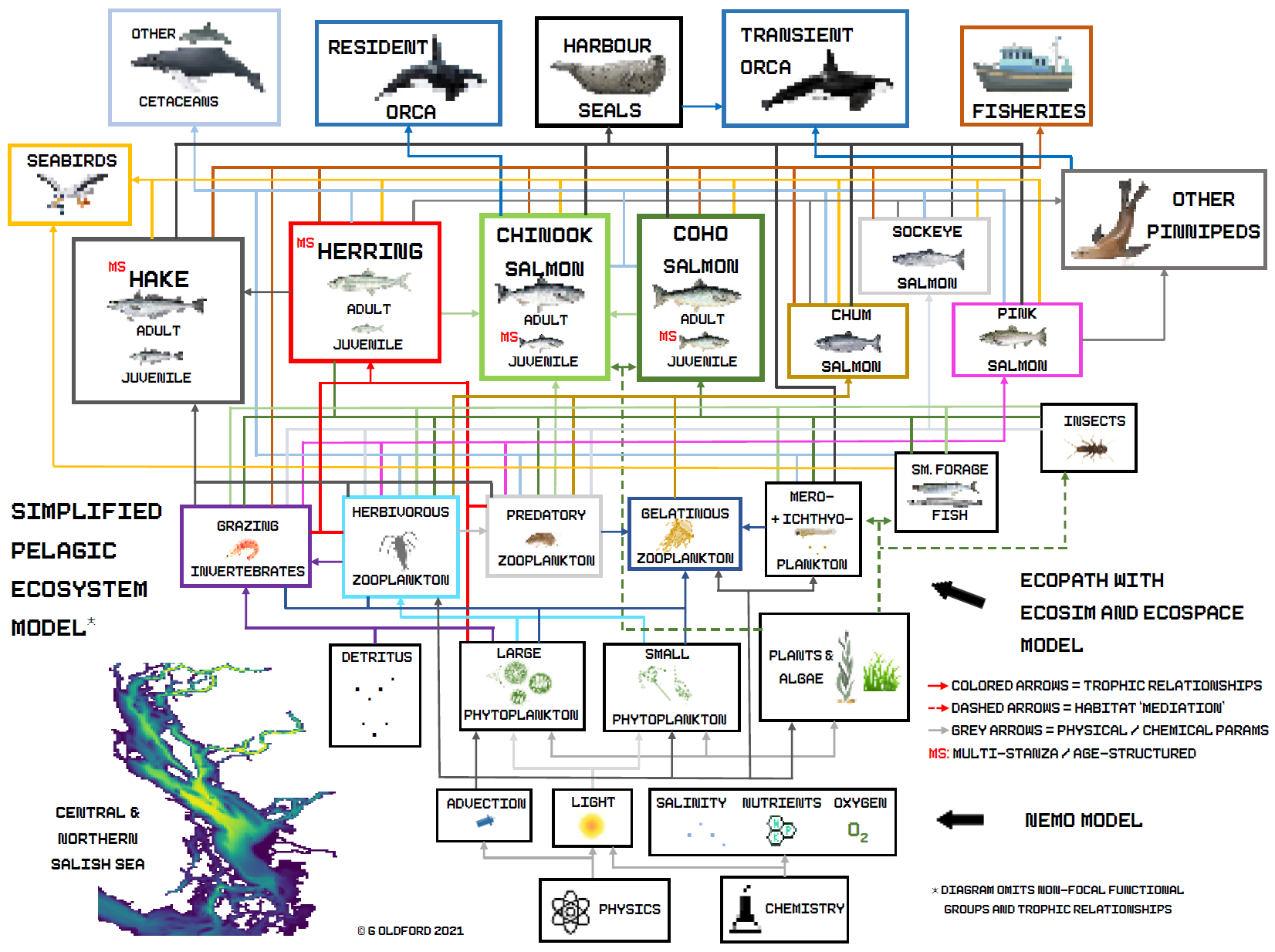
SOGEM is a set of linked models. Each layer passes its output up to the next, so a change in winds or river flow can be traced through plankton blooms to salmon, seals and killer whales.

  1. Layer 1

    HOTSSea

    Ocean physics · NEMO

    A 1.5 km hindcast of temperature, salinity, currents and mixing, 1980–2018.

    Published 2025
  2. Layer 2

    SOGEM-LTL

    Plankton · Ecospace

    Light, mixing and simple nutrient dynamics drive diatoms, flagellates and zooplankton across space and season.

    In revision
  3. Layer 3

    SOGEM-UTL

    Food web · Ecopath with Ecosim

    Forage fish, salmon life stages, hake, seabirds, seals, whales and fisheries, fitted to decades of time series.

    In preparation
  4. Layer 4

    SOGEM-E2E

    End to end

    The coupled system, used to compare bottom-up food supply with top-down predation as drivers of juvenile salmon survival.

    PhD final chapter
Living food web explorer In development

An interactive 3D tour of the SOGEM food web is in development. A link will appear here when it launches.

Talks & appearances

On the record

All talks

Jun 2026 · Invited

What can ocean-ecosystem simulations tell us about long-term environmental change in the Strait of Georgia?

Sunshine Coast Ocean Festival (public talk)

A public talk on why coho and Chinook survival fell in the early 1980s, and how a reconstructed ocean history (HOTSSea) and ecosystem simulations help test what changed for young salmon in the Strait.

May 2026 · Panel

Science, power, and decision-making

Reimagining the Future of Oceans and Fisheries: UBC Institute for the Oceans and Fisheries 10th Anniversary Symposium (moderator: Nathan Bennett, WWF)

How knowledge reaches policy and management in oceans and fisheries. I spoke on integrative ecosystem science since Holling and Walters, the data-synthesis gap that has slowed ecosystem-based management, and how AI tools are now closing it.

Jan 2025 · Invited

Insights from 'end-to-end' ecosystem modelling of the Strait of Georgia

Salish Sea Science Roundtable, Puget Sound Institute (University of Washington), co-hosted with Fisheries and Oceans Canada

How ocean conditions, lower trophic level dynamics and species interactions shaped the Strait of Georgia over four decades, from linking Ecospace with a custom NEMO hindcast. Recorded and posted on the Encyclopedia of Puget Sound, where it has the most views of the series' 65+ videos.

May 2022 · Testimony

Expert witness, study of "Science at the Department of Fisheries and Oceans"

House of Commons Standing Committee on Fisheries and Oceans (FOPO), 44th Parliament, Meeting 21

Invited testimony on data integration, how DFO scopes its science questions, and predator–prey interactions in the Strait of Georgia. The Committee's 2023 report made 48 recommendations to the Minister.

  • Jun 2026What can ocean-ecosystem simulations tell us about long-term environmental change in the Strait of Georgia?Sechelt, BC
  • May 2026Science, power, and decision-makingVancouver, BC
  • Mar 2025A look at spring bloom timing in the Strait of Georgia (1980–2018) in 2D: evaluation of a NEMO-Ecospace model frameworkVancouver, BC
  • Mar 2025Supporting the Salish Sea Marine Survival Project and future research: the NEMO-Ecospace end-to-end modelVancouver, BC
  • Jan 2025Insights from 'end-to-end' ecosystem modelling of the Strait of GeorgiaOnline

Contact

Collaborations, models, data

Interested in ecosystem modelling of the Salish Sea, the HOTSSea hindcast, or FIPEX? The best way to reach me is LinkedIn.